Department of Fruit Science and Viticulture
The Department of Fruit Science and Viticulture is responsible for teaching within the undergraduate academic study programs of Fruit Science, Viticulture, and Horticulture, as well as the master’s academic study programs of Fruit Science and Viticulture. The main objective of both study programs is the education of graduated and master agricultural engineers who possess modern theoretical and practical knowledge, as well as the competencies necessary for the efficient application of modern fruit and grapevine cultivation technologies in contemporary agricultural practice.
Read moreShow less
The Department of Fruit Science and Viticulture, later the Section for Fruit Science and Viticulture, was established at the founding of the Faculty of Agriculture in Novi Sad. Within the Provisional Plan of 1954, the first generation studied two subjects in the fields of fruit science and viticulture: Fruit Science with Fruit Processing, and Viticulture and Winemaking. Since 1958, a major in Fruit Science and Viticulture has been introduced, which over time has changed and adapted in accordance with the development of the scientific discipline and the needs of the economy.
Today, the Department of Fruit Science and Viticulture consists of ten teaching and research staff members who participate in teaching across almost all study programs of the Faculty of Agriculture, at the undergraduate, master’s, and doctoral academic levels.
The primary mission of the Department of Fruit Science and Viticulture is reflected in the dissemination and improvement of knowledge through all levels of higher education, alongside the education of experts capable of responding to the challenges of modern production in the fields of fruit science, viticulture, and horticulture. Through its teaching, scientific research, and professional work, the Department contributes to the development and advancement of these fields, connecting fundamental and applied knowledge with the needs of the economy and society. Scientific research represents one of the core activities of the Department and Section, with teachers and associates actively participating in the realization of domestic and international scientific research and development projects, as well as in the development of modern cultivation technologies, planting material production, preservation and enhancement of biodiversity, and the improvement of the quality and competitiveness of fruit and wine production.
of the Department
levels of study
Department Activities
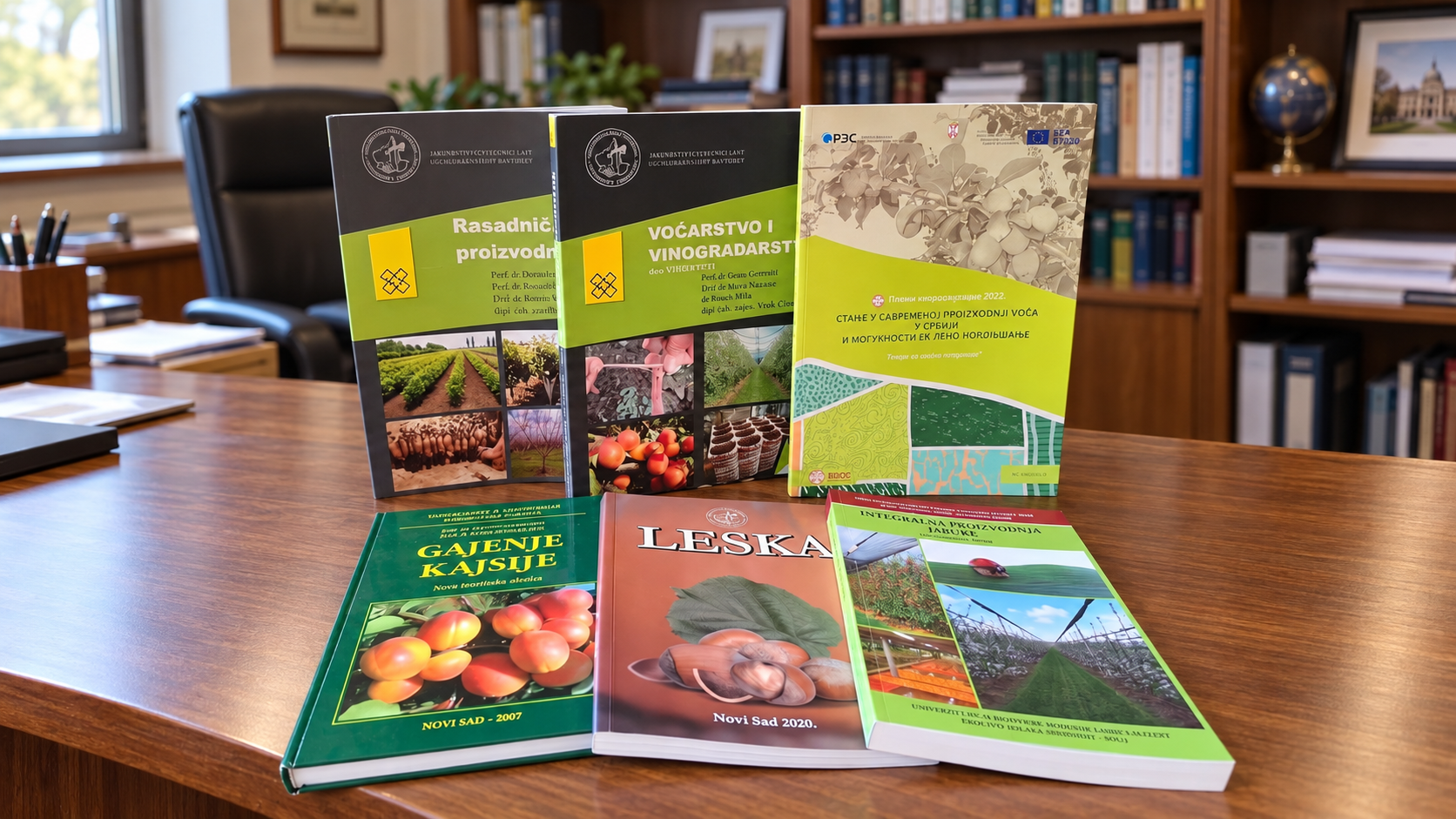
The scientific achievements of the members of the Department of Fruit Science and Viticulture have found extensive application in fruit growing and viticulture practice not only in Vojvodina, Serbia, and the former Yugoslavia, but also more widely. The most visible results of both scientific and professional work are thousands of hectares of orchards established in the country, recognized and producer-approved grapevine varieties and clones, as well as varieties and selections of walnuts, apricots, apples, columnar apples, pears, peaches, and plums. A large portion of the scientific work has been summarized in numerous scientific papers, textbooks, monographs, and other publications, which generations of producers, students, and researchers use as essential literature in fruit science and viticulture.
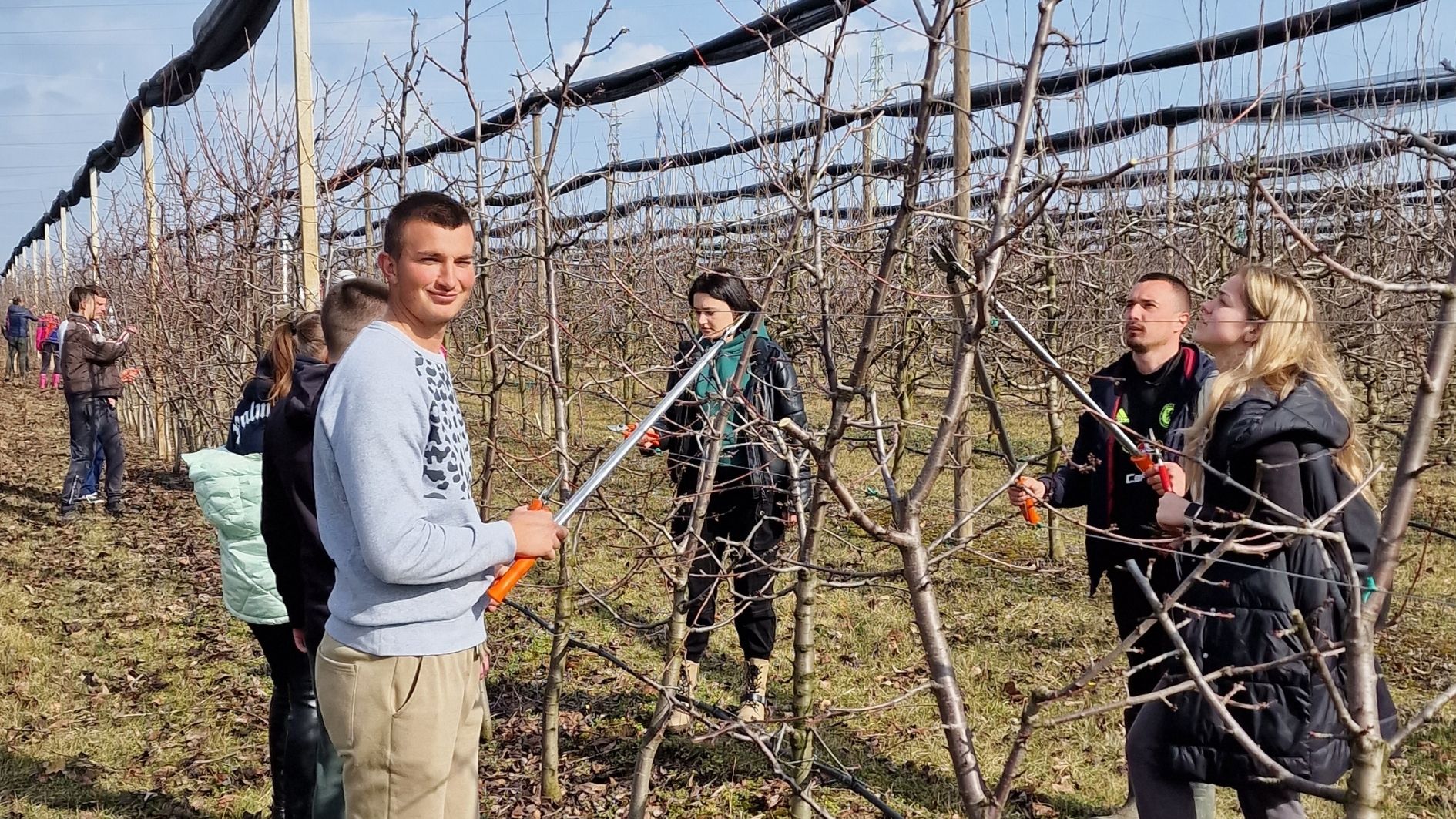
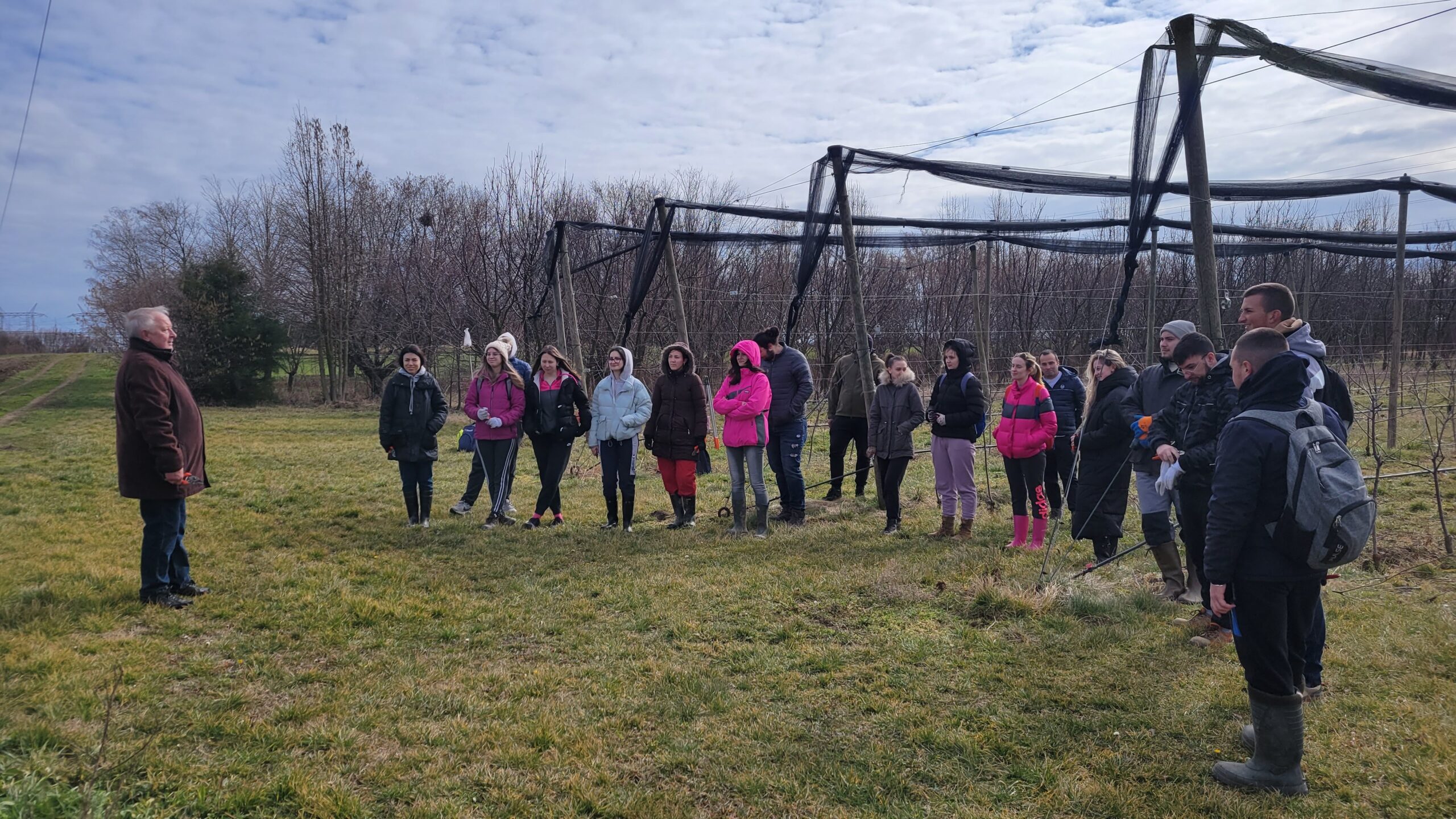
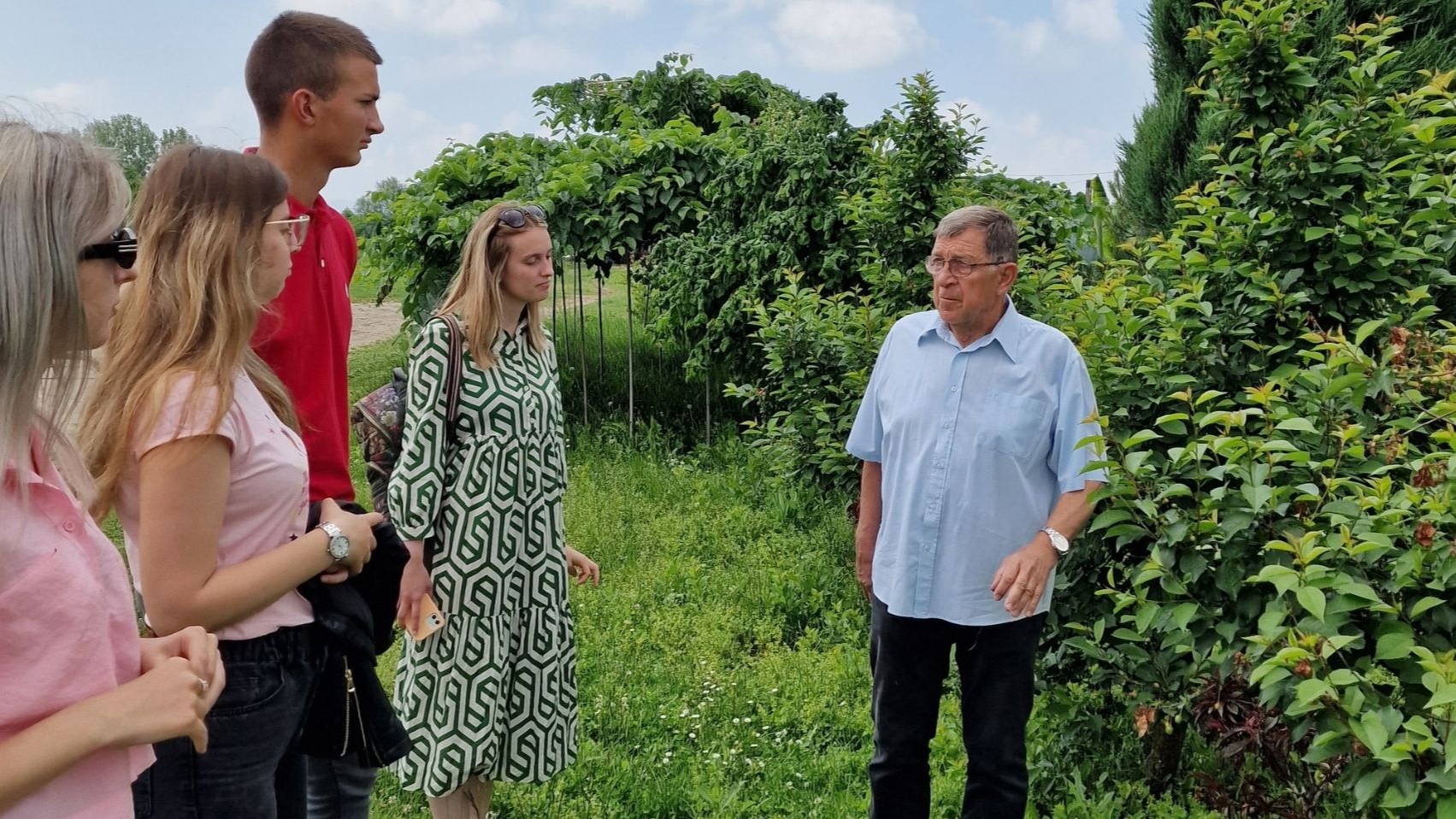
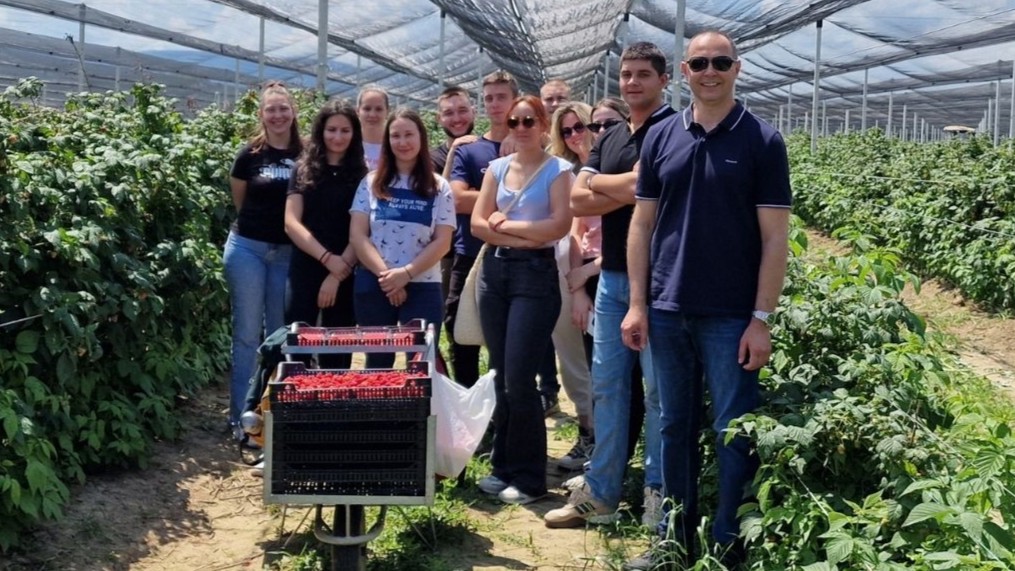
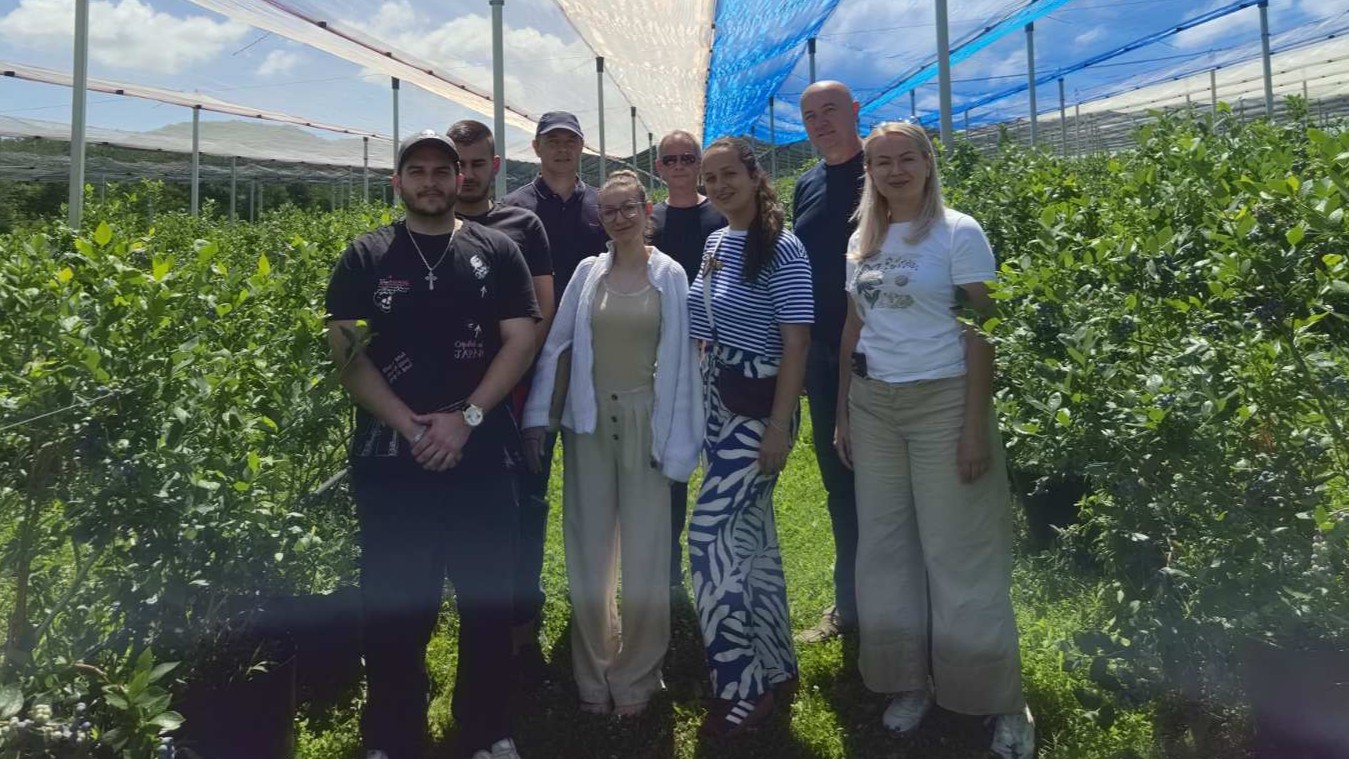
Since the Department’s establishment, experimental fields for fruit science and viticulture have been a key part of scientific and educational work, spanning 80 hectares across three locations. The nursery and fruit and grapevine plantations on the experimental fields serve as the basis for carrying out scientific research activities, field teaching, and practical student training.
Watch the video about the department
Read moreShow less
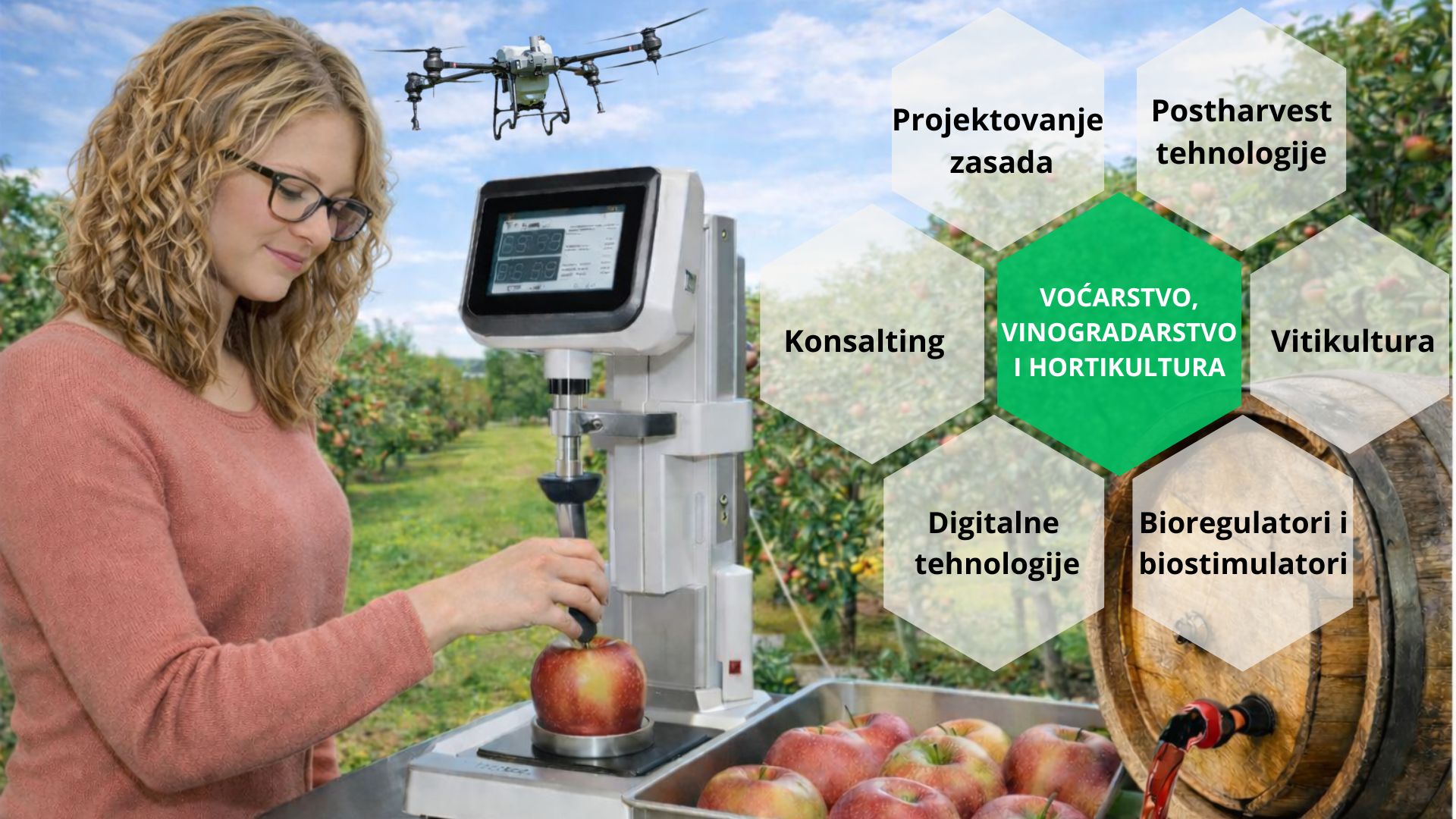
Teaching relies on both fundamental engineering knowledge and modern achievements and results from scientific research. Course contents are continuously updated towards innovations in the technology of fruit, grape, and planting material production, fruit preservation, adaptation to climate change, new trends and restrictions in plant protection, increasingly demanding production and market standards, and the application of digital technologies. In this way, future agricultural engineers majoring in fruit science and viticulture are equipped to apply modern scientific and technological advancements in order to advance the fruit-growing and viticultural profession and science.
Department members play a significant role in the work of the Fruit Growers’ Association of Vojvodina and in organizing the traditional Conference on Modern Fruit Production, which aims to connect with producers and improve fruit growing in Vojvodina through a series of topical professional lectures, discussions, and exhibitions of modern equipment, planting material, and fruit-growing supplies. Since 2003, the conference has gathered over 300 visitors annually from Vojvodina and all of Serbia.

Department Members
Learn more about our team.
The teaching process is carried out by a team of over 70 teachers and associates, including prominent experts and members of relevant scientific and professional institutions. Out of the total number of teachers and associates participating in the teaching and research process, 41 are employed in the Department of Veterinary Medicine. Teachers and researchers of the Department have published more than 3,000 scientific and professional papers, textbooks, and publications, thereby significantly contributing to the development of veterinary medicine.
Fruit growing and viticulture constitute a significant segment of agriculture, and the profession of a fruit and viticulture engineer represents an irreplaceable link in production. Today, our profession strives to keep pace with socio-political, market, demographic, climatic, and technological changes, and new generations of students are educated in light of these changes. Young people engaged in fruit growing and viticulture are expected to possess a comprehensive knowledge of biology and ecology, economics and accounting, mechanization and digital technologies, as well as a developed sense of marketing. The goal of the Department of Fruit Science and Viticulture is to educate highly competent experts capable of integrating knowledge from various fields and applying it to increase efficiency, sustainability, and economic profitability of production, while the foundation of our work is the strong connection between teaching and scientific research. Through active participation in domestic and international projects, on experimental fields, and in laboratories, Department members actively work on acquiring and transferring new knowledge in the fields of cultivation systems and technologies, selection and breeding of varieties, and the production of quality planting material. In this way, our teachers and associates continuously contribute to the advancement of the profession through the development of new technological solutions and their application in fruit-growing and viticultural practice. Under conditions of climate change and technological progress, the future of fruit growing and viticulture lies in the combination of tradition and innovation, with an increasing application of digital technologies and sustainable cultivation systems. The Department will continue to monitor and shape trends in fruit growing and viticulture through scientific research, implement them through cooperation with the economy, and educate new generations of experts who will be the drivers of modern fruit and grape production development.


- 021 485 3264

Dr. Goran Barać
Manager of the Institute / Secretary of the Department of Fruit Science and Viticulture
Gallery