

The Republican Council of the National Assembly of the People’s Republic of Serbia, at its session held on June 26, 1954, passed a decree promulgating the Law on the Establishment of the Faculty of Philosophy and the Faculty of Agriculture in Novi Sad, and the law was promulgated by the President of the Executive Council of the PR of Serbia, Jovan Veselinov, on June 30, 1954. It all began with the realization of a long-standing need for a higher education institution in Vojvodina whose task, alongside the education of agronomists, would be the development of scientific research work and agricultural production in the province and the country as a whole. Back in that distant year of 1954, social and economic conditions were met that enabled the enactment of the Law on the Establishment of the Faculty of Philosophy and the Faculty of Agriculture in Novi Sad within the University of Belgrade, with the enrollment of the first generation of students in the 1954/55 academic year.
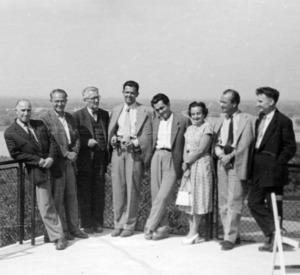
The establishment of the Faculty of Agriculture was of great significance not only for the development of agriculture, but also for the overall social life of Novi Sad, Vojvodina, Serbia, and the entire SFRY. Until the formal opening of the Faculty of Agriculture on November 20, 1954, all necessary preparations were underway for the complex operation of this higher education institution. Thus, on July 9, 1954, the Executive Council of the People’s Republic of Serbia passed a Decision on the Formation of the Founding Commission with the task of determining all organizational and technical conditions necessary for the smooth commencement of the Faculty’s work and announcing competitions for the election of teachers and faculty associates. The following were appointed as members of the Founding Commission: Dr. Stevan Nikolić, full professor at the Faculty of Agriculture in Zemun; B.Sc. Eng. Lazar Stojković, research associate at the Institute for Agricultural Research in Novi Sad; Dr. Dobrosav Todorović, professor at the Faculty of Agriculture in Zemun; Dr. Mihajlo Vučković, university professor; B.Sc. Eng. Brana Milosavljević, university professor.
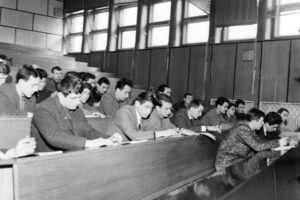
In the history of the Faculty of Agriculture in Novi Sad, the commencement of teaching on November 22, 1954, is recorded in golden letters, when the students of the first generation of the Faculty of Agriculture filled every seat in the large hall of the Workers’ Home in Novi Sad, then located at 24 Mihajlo Pupin Boulevard, and two days later exercises began in the classrooms of the Higher Pedagogical School in the Nikolajevo churchyard. In the early days of the Faculty’s work, there was only the General Department, 205 students enrolled in the first year, and teaching began with only 3 permanent teachers, 5 assistants, and 3 laboratory technicians in the hall of the Workers’ Home in Novi Sad.
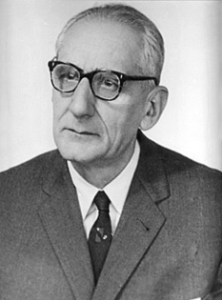
At the session of the Founding Commission held on July 14, 1954, at the Council for Education and Culture of the People’s Republic of Serbia in Belgrade, constitution was carried out and a temporary dean was elected. The election of the first teachers and the constitution of the permanent faculty administration were carried out at the session of the Founding Commission on September 27, 1954, after which the members of the Faculty Council were appointed by the decision of the National Assembly of the Republic of Serbia.
We emphasize that at the beginning of its work, the Faculty encountered full understanding and assistance both from society and from other faculties and scientific institutions in the country.

Great assistance in securing teaching staff and support for the development aspirations of the Faculty, in the early days of its existence, was provided by certain faculties of the University of Belgrade, especially the Faculties of Agriculture, Pharmacy, Veterinary Medicine, and Forestry, as well as the Faculties of Agriculture from Sarajevo and Zagreb. The experimental base, experimental fields, laboratories, and livestock facilities for conducting scientific research work by Faculty associates and student practice were made available by the then already existing independent Institute for Agricultural Research and Institute for Animal Husbandry in Novi Sad, as well as the Institute for Viticulture and Fruit Growing in Sremski Karlovci.
At the beginning of its work, the seat of the Faculty was located in several adapted buildings in Petrovaradin and on the Petrovaradin Fortress, a former artillery barracks building, a powder magazine, and several bunkers. The increased need for specialized staff required the planning and construction of a new building intended for the education of agricultural engineers, which would enable an annual enrollment of 600 students and scientific research work. Works on the first stage of construction of the present Faculty building, i.e., the pavilion and surrounding facilities, began in mid-August 1956. The “Agronomy” pavilion was completed in December 1957, the “Animal Husbandry” pavilion was taken over for use in July 1959, and the premises of the Faculty Dean’s Office with lecture halls and an amphitheater in July 1960. The “Chemistry” pavilion was moved into in 1962, and the “Biology” pavilion (today’s Faculty of Technology) was moved into in 1964.
The Faculty was founded at a time of undeveloped agriculture, of an almost rural type. It was the first to produce four much-needed generations of general-profile agronomists, and then, with the development of intensive production and the change in the production structure, it began the education of specialized agronomists who today, with their knowledge, contribute to the development of high-quality food production and production management based on modern technical, technological, economic, and ecological principles.
Републичко веће Народне Скупштине Народне Републике Србије на седници од 26. јуна 1954. године донело је указ о проглашењу Закона о оснивању Филозофског и Пољопривредног факултета у Новом Саду, а закон је прогласио председник Извршног већа НР Србије, Јован Веселинов, 30. јуна 1954. године. Све је почело реализацијом вишегодишње потребе за високошколском институцијом у Војводини чији је задатак, поред образовања агронома, и развој научно-истраживачког рада и пољопривредне производње у покрајини и земљи у целини. Те давне 1954. године стекли су се друштвени и економски услови, који су омогућили доношење Закона о оснивању Филозофског и Пољопривредног факултета у Новом Саду у саставу Универзитета у Београду, са уписом у прву годину студената у школској 1954/55. години.
Оснивање Пољопривредног факултета имало је значај не само за развој пољопривреде већ и за укупни друштвени живот Новог Сада, Војводине, Србије и целе СФРЈ. До свечаног отварања Пољопривредног факултета 20. новембра 1954. године одвијале су се све неопходне припреме за сложен рад ове високошколске установе. Тако је 9. јула 1954. године Извршно веће Народне Републике Србије донело Решење о образовању Матичарске комисије са задатком да утврди све организационо-техничке услове неопходне за несметан почетак рада Факултета и распише конкурсе за избор наставника и факултетских сарадника. За чланове Матичарске комисије именовани су: др Стеван Николић, редовни професор Пољопривредног факултета у Земуну; дипл. инж. Лазар Стојковић, научни сарадник Завода за пољопривредна истраживања у Новом Саду; др Добросав Тодоровић, професор Пољопривредног факултета у Земуну; др Михајло Вучковић, професор Универзитета; дипл. инж. Брана Милосављевић, професор Универзитета.
У историји Пољопривредног факултета у Новом Саду златним словима је забележен почетак наставе 22. новембра 1954. године, када су студенти прве генерације Пољопривредног факултета запосели сва места у великој сали Радничког дома у Новом Саду, тада на адреси Булевар Михајла Пупина 24, а два дана касније почеле су вежбе у вежбаоницама Више педагошке школе у Николајевској порти. У првим данима рада факултета постојао је само Општи смер, прву годину уписало 205 студената, а настава отпочела са свега 3 стална наставника, 5 асистената и 3 лаборанта у сали Радничког дома у Новом Саду.
На седници Матичарске комисије одржане 14. јула 1954. године у Савету за просвету и културу Народне Републике Србије у Београду извршено је конституисање, изабран је привремени декан. Избор првих наставника и конституисања сталне факултетске управе извршен је на седници Матичарске комисије 27. септембра 1954. године, а затим су одлуком Народне Скупштине Републике Србије именовани чланови факултетског Савета.
Истичемо да је Факултет у почетку свог рада наилазио на пуно разумевање и помоћ како друштва тако и других факултета и научних институција у земљи.
Велику помоћ у обезбеђивању наставног кадра и подршку у развојним стремљенима Факултета, у првим данима његовог постојања, пружили су поједини факултети Универзитета у Београду, а посебно Пољопривредни, Фармацеутски, Ветеринарски и Шумарски, као и Пољопривредни факултети из Сарајева и Загреба. Експерименталну базу, огледна поља, лабораторије и сточарске објекте за обављање научно-истраживачког рада сарадника Факултета и праксу студената ставили су на располагање тада већ постојећи самостални Институт за пољопривредна истраживања и Институт за сточарство у Новом Саду, те Институт за виноградарство и воћарство у Сремским Карловцима.
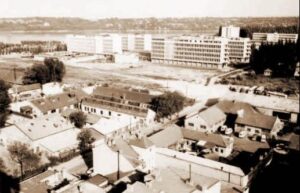
У почетку рада седиште Факултета се налазило у више адаптираних објеката у Птероварадину и на Птероварадинској тврђави, зграда бивше артиљеријске касарне, барутана и неколико бункера. Повећана потреба за усмереним кадровима захтевала је планирање и изградњу новог објекта намењеног образовању пољопривредних инжењера који би омогућио годишњи упис од 600 студената и нучно истраживачки рад. Радови на првој етапи изградње данашње зграде Факултета, односно павиљона и околних објеката, започети су средином августа 1956. године. Павиљон „Ратарски“ је завршен у децембру 1957. године, „Сточарски“ павиљон примљен на коришћење јула 1959. године, а просторије деканата Факултета са предаваонама и амфитетаром у јулу 1960. године. Павиљон „Хемисјки“ је усељен 1962. године, а павиљон „Билошки“ (данашњи Технолошки факултет) је усељен 1964. године.
Факултет је настао у време неразвијене пољопривреде, готово руралног типа. Први је дао четири тако неопходне генерације агронома опште стручне спреме, а затим је са развојем интензивне производње и мењањем структуре производње започео образовање агронома усмереног стручног образовања, који данас својим знањем доприносе развоју квалитетне производње хране, управљању производњом на савременим техничко-технолошким, економским и еколошким принципима.