
Seven decades ago, on November 20, 1954, the Faculty of Agriculture in Novi Sad was founded. The need to establish a higher education institution, whose primary activity is higher education in the field of agriculture, was more than logical at that time. The country had recently emerged from war, and agriculture was the backbone of development and security. It was necessary to create new generations of experts who would engage in the very responsible activity of food production throughout the country, especially in Vojvodina.
The Faculty has fully justified this entrusted role, and over these seventy years of existence, it has produced thousands of experts whose knowledge and work form the foundation of modern agriculture in the AP Vojvodina, Serbia, and beyond. The Faculty of Agriculture is one of the two oldest faculties of the University of Novi Sad and the only public higher education institution in the Autonomous Province of Vojvodina that educates experts in the fields of agriculture, landscape architecture, and veterinary medicine. The Faculty of Agriculture has become an indispensable and reliable partner and support to the domestic economy, individual producers, state institutions, and international organizations. Looking back at the Faculty’s development so far, we can see that it has always managed to adapt to changes, respond to challenges it faced, and take a step forward. New scientific fields have been conquered, new subjects and study programs introduced, new laboratories with modern equipment opened, all according to the demands and needs of society and the market. It is necessary to continue on this path. The Faculty is currently one of the most active institutions at the University of Novi Sad, and in Serbia, in terms of Horizon Europe projects, not only participating in them but also coordinating large international projects that our researchers successfully implement. Year by year, the scope and type of services our laboratories provide to the economy are growing, especially highlighting the services our laboratories realize through programs of entrusted tasks by state institutions, such as the Ministry of Agriculture, Forestry, and Water Management. In a rapidly changing world, the place of agriculture and education in agriculture is very important, but agriculture, like many other production activities, is very vulnerable to changes, whether they come from nature or are conditioned by social movements.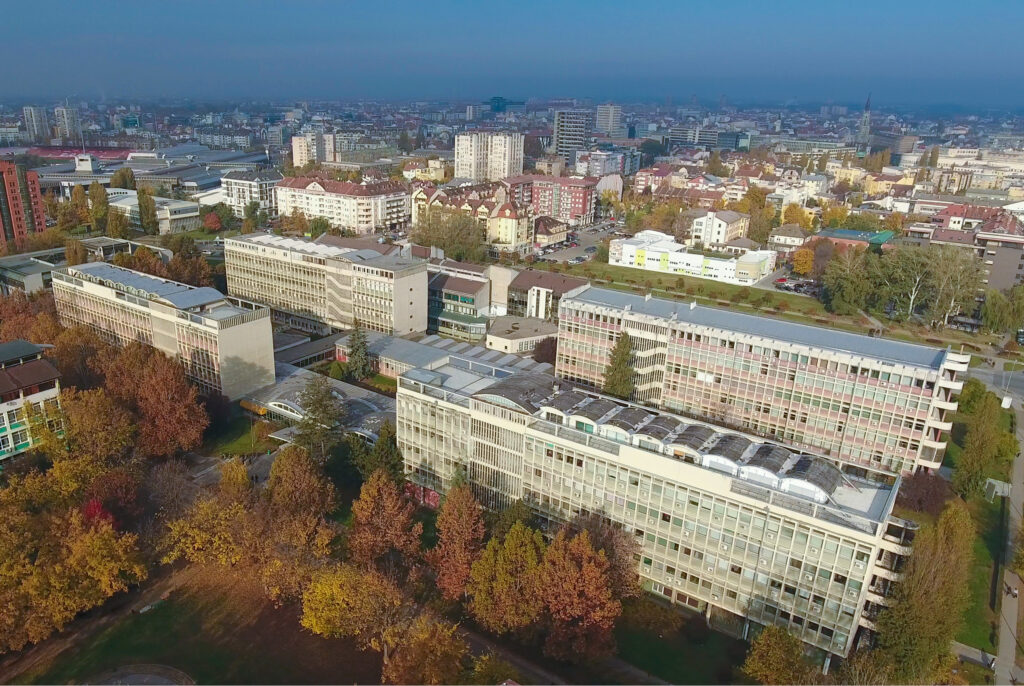
Experience from other developed countries tells us that only agricultural universities, or faculties, that have timely adapted to new circumstances survive, offering attractive study programs to the education market that reflect new trends in society, based on high-quality scientific work, but also study programs with a high share of practical knowledge. We must also mention significant steps towards the internationalization of studies and the increase in the share of foreign students. International projects in the field of education, joint study programs with universities abroad, summer schools, and courses in English have already contributed to greater visibility of our faculty on the international scene and made it attractive to young people from all parts of the world. In fifty or a hundred years, when some new generations of professors, associates, and students browse through this monograph, they will be able to see a reflection on a fruitful period in the Faculty’s work from 2014 to 2024 during which significant achievements were made and the foundation of the institution, whose existence we celebrate today, was strengthened.